The Eastern Redbud, Cercis canadensis, is known for its striking floral display at the start of spring. Eastern Redbuds can reach a height of 20 to 30 feet with a 25-foot spread and a lifespan of 30 years. Redbuds thrive in full sun or partial shade and generally require minimal care. In general, these trees prefer sites with light, rich, moist soil, but are very adaptable and can even flourish in sandy and alkaline soils along dry ridges or wet banks.
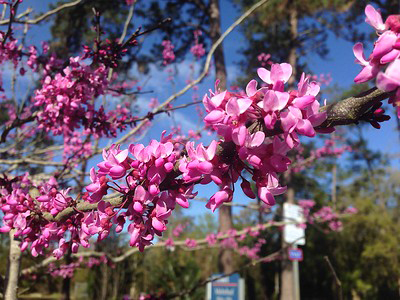 Eastern Redbud photo courtesy of UF/IFAS
Sweetbay Magnolia, Magnolia virginiana, well-known in the South for their eye-catching white blossoms, is an evergreen or deciduous tree reaching up to 100 feet tall. These large, creamy white flowers bloom in late spring or early summer and produce a pleasing lemon scent. Sweetbay Magnolias are typically found in wetland areas and thrive in full sun or partial shade, preferably in a rich, acidic soil. Be sure to water it at least twice weekly for the first few months.
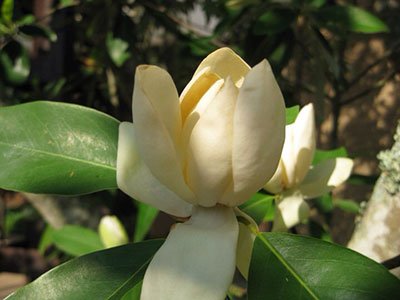 Sweetbay Magnolia photo courtesy of UF/IFAS
Live Oaks, Quercus virginiana, are peppered across north Florida creating beautiful sprawling tree canopies reaching up to 60-80 feet tall and 60-120 feet wide. Live Oaks, a staple of Florida, provide many ecosystem services and are sturdy, wind-resistant trees. These trees are ideal shade trees and prefer lots of room to accommodate their mature size. When planting, choose a location with full sun or partial shade with moist, acidic soil of sand, loam, or clay. Be sure to leave enough room away from curbs, sidewalks, or driveways as roots may eventually grow large enough to lift or even crack surfaces. Yearly pruning for the first five years is advised.
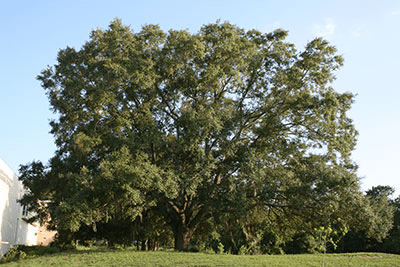 Live Oak photo courtesy of UF/IFAS